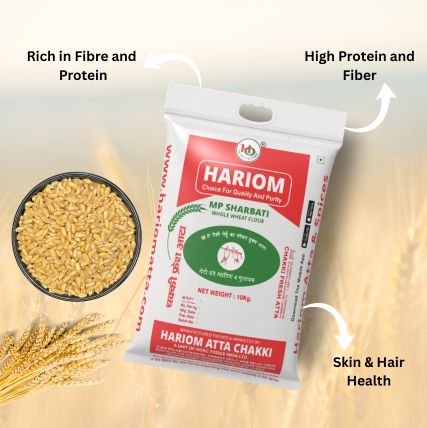
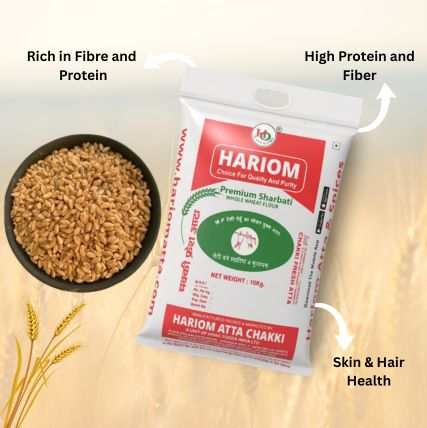
If you have ever bitten into a roti that was impossibly soft, lightly sweet, and stayed pliable even after cooling, there is a good chance it was made from Sharbati atta.
Sharbati wheat is grown in a very specific belt of Madhya Pradesh, particularly in rain-fed regions where the soil carries a naturally high potash content. Because these fields rely on seasonal rainfall rather than heavy irrigation, the wheat that grows here develops a protein content that is 1–2% higher than most other wheat varieties grown in India. That extra protein is exactly what gives Sharbati rotis their characteristic stretch, softness, and slight golden hue.
Simply put: not all atta is Sharbati, and not all Sharbati wheat is equal. The region, the soil, and the milling process all matter.
What Makes Sharbati Wheat Flour Different from Regular Atta?
This is one of the most searched questions when it comes to flour choices in India, so let us break it down clearly.
Sharbati atta vs regular whole wheat atta — key differences:
| Feature | Sharbati Atta | Regular Wheat Atta |
|---|---|---|
| Protein Content | 12–14% (higher) | 10–12% |
| Taste | Naturally sweet & nutty | Mild, plain |
| Roti Texture | Softer, fluffier, stays fresh longer | Can turn stiff quickly |
| Gluten Quality | Premium gluten network | Average gluten |
| Source Region | Madhya Pradesh (rain-fed) | Various regions across India |
The higher protein and better gluten quality in MP Sharbati wheat flour means your rotis puff up more easily on the tawa, have better elasticity when you roll them, and do not dry out as fast in your dabba. That last point matters a great deal for lunchboxes and meal prep.
Why Do Sharbati Rotis Stay Soft for Longer?
This is a question that comes up often in homes and food communities, and the answer is surprisingly simple.
Sharbati atta has a naturally higher moisture-retention capacity. When you knead dough made from premium Sharbati atta, the flour absorbs water more evenly because of its fine, consistent grain size and high-quality starch composition. The result is a dough that is smoother to work with, rolls out without cracking at the edges, and produces rotis that stay soft for 4–6 hours after cooking even without a cloth wrap.
For families cooking for multiple members or packing rotis for school or office, this is not a small detail. It is the difference between a roti you enjoy and one you have to force yourself to eat.
How Hariom's Fresh Chakki Atta Takes Sharbati to the Next Level
At Hariom Atta & Spices (HOAC Foods), every batch of Sharbati atta begins with hand-selected wheat sourced directly from the finest farming regions of Madhya Pradesh. But what sets HOAC's process apart is what happens after the wheat arrives.
The brand uses dry milling and stone grinding technology a method that retains the wheat's natural oils, nutrients, and aroma rather than stripping them out through high-heat industrial processing. This means the flour you receive:
- Is chemical-free and preservative-free
- Retains natural fibre, minerals, and the wheat's own aroma
- Is freshly milled on order not sitting in a warehouse for months
- Delivers rotis with that familiar, wholesome chakki-fresh taste
This is why Hariom's tagline is not just a slogan "Fresh atta, rozana banta" — it is a production philosophy. India's first online chakki operating on a made-to-order model means you get flour that is as close to your neighbourhood chakki as possible, but with the hygiene standards and convenience of a modern food brand.
Sharbati Atta Nutrition: What Are You Actually Eating?
People searching for the healthiest atta for rotis are right to look at Sharbati. Here is what a typical 100g serving of whole wheat Sharbati atta provides:
- Protein: ~12–14g — essential for muscle repair, energy, and satiety
- Dietary Fibre: ~10–12g — supports digestion, gut health, and blood sugar regulation
- Complex Carbohydrates: Slow-release energy that keeps you full longer
- Iron, Magnesium, Zinc: Micronutrients often lost in maida (refined flour)
- B Vitamins: Naturally present in the wheat bran, which is retained in whole wheat chakki atta
Switching from maida to Sharbati whole wheat atta is one of the single most impactful dietary changes an Indian household can make. The fibre alone helps manage cholesterol, supports healthy digestion, and stabilizes post-meal blood sugar something particularly relevant in an era where lifestyle-related health concerns are rising steadily.
How to Make the Perfect Sharbati Roti
Tips from the Kitchen
Getting the most out of soft roti atta comes down to a few simple habits:
1. Rest your dough. Knead the dough well and let it rest for at least 20–30 minutes. This allows the gluten in Sharbati atta to fully relax, making rolling much easier.
2. Use lukewarm water. Warm water activates gluten more effectively and gives you a smoother, more elastic dough.
3. Do not over-flour your rolling surface. A little dusting is fine, but too much extra flour can toughen the roti.
4. Cook on medium-high heat. A properly heated tawa ensures the roti puffs up — the hallmark of a good chakki atta roti.
5. Apply ghee immediately. A small dab of desi ghee on a hot roti seals in moisture and softness. It also adds a richness that no margarine substitute can match.
These are not tricks. They are simply what happens when you start with quality Sharbati wheat flour and treat it with respect.
Frequently Asked Questions About Sharbati Atta
What is the difference between Sharbati atta and normal atta? Sharbati atta comes from a specific rain-fed wheat variety grown in Madhya Pradesh. It has higher protein content, a naturally sweet flavour, and produces softer rotis that stay fresh longer compared to ordinary whole wheat atta.
Is Sharbati atta good for health? Yes. Sharbati atta is a whole wheat flour rich in dietary fibre, protein, and essential minerals. It supports digestion, provides sustained energy, and is a healthier alternative to refined flour (maida).
Which is the best Sharbati atta in India? The best Sharbati atta is one that is freshly milled from hand-selected MP Sharbati wheat, free from preservatives, and processed using stone grinding or dry milling to preserve nutrients. Hariom Atta's MP Sharbati Atta and Premium Sharbati Atta are produced with exactly this approach.
How do I make soft rotis at home? Use good quality chakki Sharbati atta, knead with lukewarm water, rest the dough for 30 minutes, roll on medium pressure, and cook on a hot tawa. Apply ghee right after cooking for the softest results.
Can I use Sharbati atta for chapati, paratha, and puri? Absolutely. Sharbati atta's superior gluten structure makes it versatile. It performs well for everyday chapatis, layered parathas, and even puris when prepared correctly.
Where can I buy fresh Sharbati atta online? You can order fresh MP Sharbati Atta and Premium Sharbati Atta directly from hariomatta.com available in 1 kg, 5 kg, and 10 kg packs, freshly milled and delivered to your door.
The Bottom Line: Your Roti Deserves Better Atta
The roti is not a side dish in Indian cooking. It is the meal's anchor, the thing everything else wraps around, scoops up, or pairs with. And when the roti is soft, puffy, and full of natural flavour, it elevates everything on the plate.
That kind of roti starts with the right atta. MP Sharbati wheat flour, freshly milled with traditional stone grinding and no additives, is the closest you can get to what generations of Indian families grew up eating only now, you can have it delivered fresh to your home.
Hariom Atta brings you exactly that. No shortcuts, no preservatives, no compromise.
Explore Hariom's range of Sharbati atta, multigrain atta, and chakki fresh flour at hariomatta.com


![Bring more grains, fibre and variety to your everyday rotis—[shop Hariom Fresh Multigrain Atta] today.](http://www.hariomatta.com/cdn/shop/articles/multigrain_atta.png?v=1785400960&width=533)