Why Every Indian Kitchen Cares About Fresh Atta
In most Indian homes, the roti is the heart of the meal. And every home cook knows the difference: on some days the dough is soft, the rotis puff beautifully and stay tender till the last bite. On other days the dough turns dry, the rotis go hard and something just tastes "off". The reason is often not your hands. It is the atta.
Fresh atta is whole wheat flour that has been milled recently, stored properly and still carries the natural aroma, softness and nutrition of the wheat grain. Because whole wheat atta keeps the germ and bran, it ages faster than refined flour. That is why freshness matters so much for atta.
What Is Fresh Atta?
Fresh atta is whole wheat flour milled from clean, quality wheat and packed shortly after milling, so it reaches your kitchen with its natural sweetness, colour and aroma intact. Fresh chakki atta is ground slowly on stone, which keeps the flour cool and helps retain the wheat's natural goodness.
Atta that sits for too long in warehouses, shops or open storage slowly loses its aroma. Over time the natural oils in the wheat germ can turn stale, giving a bitter or musty smell and a dull taste to the roti.
6 Easy Tests to Check If Your Atta Is Fresh
You do not need a lab. Use these simple kitchen checks:
- Smell test: Fresh atta smells mildly sweet and nutty, like wheat. A sour, musty or oily smell means it is old.
- Colour test: Whole wheat atta should be a warm creamy-golden shade. Greyish, very dull or patchy colour is a warning sign.
- Touch test: Rub a pinch between your fingers. Fresh atta feels soft and silky, not damp, lumpy or sticky.
- Dough test: Fresh atta absorbs water well and forms a soft, smooth, elastic dough that stays pliable.
- Roti test: Fresh atta rotis puff up easily, stay soft for hours and taste naturally sweet.
- Pest check: Look for tiny insects, webbing or clumps. Any of these means the atta is no longer good to use.
Fresh Atta vs Old Atta: What Changes
|
Feature |
Fresh Atta |
Old Atta |
|---|---|---|
|
Smell |
Sweet, nutty wheat aroma |
Musty, sour or stale |
|
Dough |
Soft, smooth, elastic |
Dry, crumbly, needs extra water |
|
Roti |
Puffs well, stays soft |
Turns hard and chewy quickly |
|
Taste |
Naturally mildly sweet |
Flat or slightly bitter |
|
Storage risk |
Low if kept airtight |
Higher chance of lumps and pests |
How Long Does Atta Stay Fresh?
Whole wheat atta is best used within a few weeks to a couple of months of milling, depending on how it is packed and stored. Always check the manufacturing and best-before dates on the pack. Because atta contains the wheat germ, it is more sensitive to heat, humidity and air than refined flour.
How to Store Fresh Atta at Home
- Transfer atta into a clean, dry, airtight steel or food-grade container after opening the pack.
- Keep it in a cool, dry place away from the stove, sunlight and the sink.
- Never use a wet spoon or hand to scoop atta.
- In humid weather or monsoon, store smaller quantities and finish them sooner.
- Do not mix new atta with old atta in the same container.
- Use a clean, dry spoon and close the lid properly every time.
Where Hariom Atta & Spices Fresh Atta Comes From
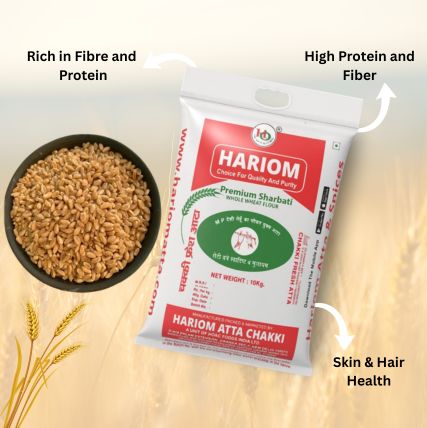
Hariom Atta & Spices is the flagship brand of HOAC Foods India Limited, listed on the NSE SME platform. Our atta is made from wheat sourced from Madhya Pradesh, a region known across India for its quality wheat, and processed using the traditional stone-ground chakki method. The goal is simple: pure atta, fresh to your kitchen, true to the taste of home.
Our products reach more than 4,000 kirana stores across India and are also exported to the UK, USA and Australia through HOAC Exports Private Limited, so families in India and abroad can enjoy the same dependable quality.
Nutrition in Fresh Whole Wheat Atta
Fresh whole wheat atta keeps the bran and germ of the grain, so it naturally provides:
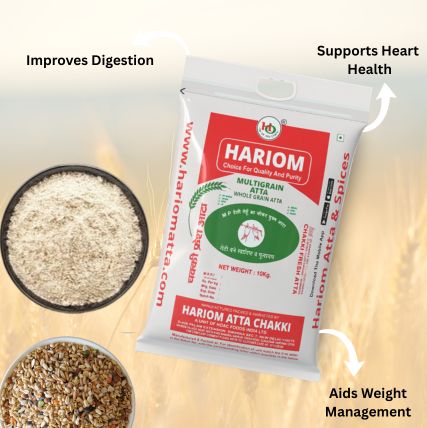
- Dietary fibre that supports digestion and keeps you full for longer
- Plant protein from wheat, useful as part of a balanced diet
- Complex carbohydrates for steady everyday energy
- B-vitamins and minerals such as iron, magnesium and zinc, naturally present in whole grain
Exact values vary by wheat variety and processing, so refer to the nutrition label on your pack.
Key Benefits of Fresh Atta
- Softer rotis: Better water absorption gives a soft, pliable dough.
- Better aroma and taste: The natural sweetness of wheat comes through.
- Whole-grain goodness: Fibre and nutrients stay in the flour.
- Fewer storage problems: Fresh atta has less chance of staleness.
- Versatile: Works for roti, phulka, paratha, puri and more.
Best Suited For
- Families who eat roti or phulka every day
- Home cooks who want soft, puffed rotis for tiffin and dinner
- Parents looking for whole grain options for children
- Health-conscious households choosing whole wheat over refined flour
- Anyone who wants consistent atta quality in every pack
Tips for Softer Rotis with Fresh Atta
- Use lukewarm water and add it slowly while kneading.
- Knead for 6–8 minutes until the dough is smooth.
- Rest the dough, covered, for 20–30 minutes.
- Roll evenly and cook on a hot tawa, then puff on direct flame.
- Store cooked rotis in a cloth-lined casserole to keep them soft.
Frequently Asked Questions About Fresh Atta
1. What is fresh atta? Fresh atta is whole wheat flour that has been milled recently and stored properly, so it keeps its natural aroma, colour, softness and nutrition.
2. How do I know if my atta is fresh? Fresh atta smells sweetly nutty, feels soft and silky, has an even creamy colour and makes a smooth, elastic dough. A musty smell, lumps or insects mean it is not fresh.
3. How long does fresh atta last? Whole wheat atta is best used within a few weeks to a couple of months of milling. Always follow the best-before date on the pack and store it airtight in a cool, dry place.
4. Is fresh chakki atta better than regular atta? Chakki atta is ground slowly on stone, which helps retain the natural character of the wheat. Many households prefer it for its aroma, taste and soft rotis.
5. Why do my rotis turn hard even with good atta? Common reasons are old atta, too little water, short kneading or skipping the dough rest. Using fresh atta, lukewarm water and a 20–30 minute rest usually fixes it.
6. Can I refrigerate atta to keep it fresh? In humid weather, keeping atta in an airtight container in the fridge can help. Bring it to room temperature before kneading and avoid moisture getting inside.
7. Why does atta get insects or lumps? Moisture, warmth and poor sealing invite pests and lumps. Use a dry airtight container, avoid wet spoons and buy quantities you can finish in a reasonable time.
8. Is fresh atta good for chapati, paratha and puri? Yes. Fresh whole wheat atta works well for chapati, phulka, paratha, puri and other everyday Indian breads.
9. What wheat is used in Hariom Atta & Spices atta? Hariom Atta & Spices atta is made from quality wheat sourced from Madhya Pradesh and processed using the stone-ground chakki method.
10. Where can I buy fresh atta online? You can buy Hariom Atta & Spices atta directly from our website, hariomatta.com, with delivery to your doorstep.