Why Stone-Ground Flour Made Fresh Still Wins in Every Indian Kitchen
That is why your grandmother's kitchen always had a unique smell when the chakki wala used to visit her — there was something about freshly ground atta which you could not get by opening a packet of flour kept in a shelf for months together. Even now, in most Indian households, there are certain criteria which cannot be negotiated in a kitchen and freshness of atta is one of those. Rotis made from freshly milled flour will rise high, taste sweet, and smell like fresh wheat.
Freshly milled atta refers to atta prepared very near to its purchasing or cooking time. Since it contains more of the natural oils and fiber present in wheat, it becomes quite different from atta which has been stored for weeks or months after being milled.
The Sourcing Story: From MP Wheat Fields to Your Kitchen
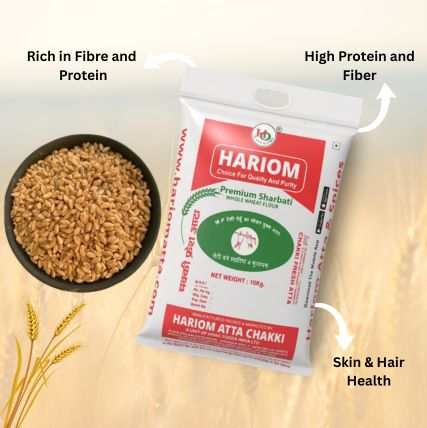
Freshness begins well before the milling process at Hariom Atta & Spices. The wheat we use comes straight from the wheat growing regions of Madhya Pradesh, which happens to be a source of some of the best wheat types grown in India. These include high protein content wheat varieties like Sharbati and Lokwan. The grain is bought on the basis of cycle depending upon the season of harvest and is ground using the traditional method of stone grinding (chakki), keeping the temperature cool.
The low-temperature stone grinding method is essential in order to preserve the health benefits of atta since the wheat germ oil gets affected by the friction heat generated in steel roller mills. This is because the wheat germ oil contains the aroma as well as the nutritional value of the atta.
The Nutrition Story: What Freshness Actually Protects
Once wheat grains are milled, they become alive, with their natural oil being exposed to the air, which leads to oxidation gradually. That is why aged atta may get a slightly bitter taste due to rancidity of fat in the germ of the wheat.
The content of natural vitamin E, B-vitamins, and dietary fiber in freshly milled whole wheat atta is noticeably higher compared to those that have been kept for several weeks after milling, because vitamins and fiber break down upon long-term contact with air, light, and warmth. It is one of the main reasons why nutritionists often recommend buying small amounts of atta.
Key Benefits of Freshly Milled Atta
- Better taste and aroma: The natural nutty, slightly sweet flavour of wheat is most pronounced right after milling.
- Softer rotis: Fresh atta has better moisture retention and gluten development, giving you softer, more pliable rotis that stay soft for longer.
- Higher nutrient retention: Less time between mill and plate means fibre, vitamins, and healthy oils are better preserved.
- No preservatives needed: Freshness itself is the preservation strategy — no need for chemical additives to mask staleness.
- Better digestibility: Fresh whole wheat flour is easier on digestion compared to flour where natural oils have started to oxidize.
Best Suited For
Freshly milled atta is ideal for households that prioritize traditional taste and nutrition over long shelf life — families making rotis, parathas, and pooris as a daily staple, health-conscious buyers who read nutrition labels closely, and anyone who has grown up on chakki-fresh flour and can immediately tell the difference in taste. It's also well suited to smaller households that can comfortably use up a 5kg or 10kg pack within a few weeks, ensuring the atta is consumed at peak freshness.
Frequently Asked Questions
Q: How can I tell if atta is freshly milled? Freshly milled atta has a light, natural wheat aroma, a slightly warm off-white to golden colour, and a soft, slightly coarse texture. Stale atta often looks duller and may develop a faint sour or bitter smell.
Q: How long does freshly milled atta stay fresh? Stored in an airtight container in a cool, dry place, freshly milled atta typically stays at peak freshness for 4-6 weeks. Refrigeration can extend this further in hot or humid climates.
Q: Is freshly milled atta the same as stone-ground atta? Not exactly — stone-ground (chakki) refers to the milling method, while "freshly milled" refers to how recently that milling happened. The best atta combines both: stone-ground for nutrient retention, and freshly milled for peak taste and aroma.
Q: Does freshly milled atta need refrigeration? It's not mandatory, but storing it in a cool, airtight container — refrigerated during summer months — helps preserve its natural oils for longer and prevents early rancidity.
Q: Why does packaged atta from supermarkets sometimes taste different from chakki atta? Mass-produced packaged atta is often milled weeks or months before it reaches store shelves and may use high-speed roller mills that generate heat, both of which reduce the freshness and aroma compared to atta milled closer to purchase using traditional stone-grinding.