Most people choose their atta either by brand recognition or by price — and most of the time, they have no reliable way of knowing whether what's in the bag is actually fresh, well-milled, and genuinely what it claims to be. Given that atta is consumed more frequently than almost any other ingredient in an Indian household, this is one of those purchases worth spending five extra minutes getting right.
The good news is that good-quality atta leaves clear signals, and poor-quality or adulterated flour does too once you know what to look for. Here is exactly how to check, both before you buy and after the bag is open.
What Does "Good Quality Atta" Actually Mean?
Before getting into the tests, it helps to define what you're actually evaluating. The best quality atta combines four things:
Freshness: Flour that was milled recently, retaining its natural oils, moisture, and aroma rather than having oxidized over weeks or months in storage.
Correct milling: Stone-ground or chakki-milled atta preserves the bran and germ intact. High-speed roller milling can strip these out or damage the starch structure, affecting both nutrition and cooking performance.
Purity: No adulteration with chalk powder, talc, rice flour, or low-grade wheat blended in to inflate volume.
Right grain quality: The wheat variety itself matters. High-protein wheat like Sharbati produces more elastic dough and softer rotis than low-protein, high-yield commercial varieties.
Test 1: Look at the Colour
Good quality whole wheat atta should be creamy white to light beige with a warm, slightly golden undertone. This colour comes from the natural wheat bran and reflects the grain's own pigmentation.
Watch out for flour that looks:
- Brilliant white or stark white: this often signals either bleaching agents or excessive refinement that has stripped away the bran
- Uneven or patchy in colour: irregular patches can indicate blending of different wheat grades or addition of foreign substances
- Noticeably grey or dull: may signal old, oxidised stock that has been sitting in storage too long
If you're specifically buying Sharbati atta, the flour should carry a distinctly warmer, more golden tone than generic whole wheat, a reflection of the grain's natural density and color.
Test 2: Smell It Before You Use It
Fresh atta has a clean, faintly earthy, wheaty aroma, subtle but present and pleasant. This aroma comes from the natural oils in the wheat germ, which begin to oxidize and go rancid over time as the flour ages.
Stale atta typically smells flat, musty, or slightly sour sometimes described as "old cupboard" smell. If you notice any of these off-notes when you open a new bag, it's a strong indicator that the flour has been stored too long before reaching you, regardless of what the packaging date says.
A quick rule of thumb: if the flour smells faintly sweet or nutty when you open the pack, it's fresh. If it smells of nothing at all or has any trace of sourness, it has likely already lost meaningful nutritional potency.
Test 3: Feel the Texture Between Your Fingers
Pinch a small amount of atta between your thumb and forefinger and rub it gently. Good quality whole wheat atta should feel
- Slightly grainy but consistently fine: not powdery-smooth like maida, but not coarse or gritty either
- Dry but not dusty: fresh flour has a slight natural softness from retained moisture in the bran; overly dry, dusty flour has often lost this
- Free of lumps or clumping: lumps or clumps in an unopened bag indicate moisture exposure during storage, which compromises both texture and shelf life
If the flour feels noticeably gritty or sandy between your fingers, this can signal adulteration with substances like chalk powder, talc, or low-quality starch, a reasonably common adulterant in loose, unpackaged flour sold in open markets.
Test 4: The Gluten Strength Test
(At Home, No Equipment Needed)
This is the most direct indicator of how the atta will actually perform in your kitchen. Take a tablespoon of flour, add just enough water to bring it together, and knead it into a small dough ball for about two minutes.
What good quality atta feels like: smooth, elastic, and slightly springy; it springs back gently when you press it with a finger and holds together cleanly without tearing.
What poor quality atta feels like: sticky and slack (often over-starchy or blended with lower-quality flour), crumbly and brittle (low protein, poor gluten development), or stiff and heavy (possibly blended with rice flour or other starches).
This small test is essentially a miniature version of what happens every time you knead a full batch of roti dough and it tells you in two minutes whether the flour has the protein and gluten structure needed to produce soft, puffed rotis.
Test 5: Check Water Absorption
Good whole wheat atta, particularly from higher-protein varieties like Sharbati, absorbs water well and evenly. When you mix it with water while kneading, the flour should take up moisture smoothly without resisting or leaving dry pockets.
A useful comparison: roughly 2 cups of quality whole wheat atta typically absorbs around ¾ cup of water into a well-hydrated, pliable dough. Flour that needs significantly less water than this is often lower in protein or has been mixed with more absorbent starchy additions that absorb water differently.
Higher water absorption also directly correlates with softer rotis; flour that absorbs more moisture produces dough that retains more steam on the tawa, which is exactly what makes rotis puff and stay soft longer.
Test 6: Read the Label Honestly
For packaged atta, the label carries more useful information than most buyers actually look at. A few specific things worth checking:
Milling or packing date: Look for a milling date rather than just a "best before" date. Ideally, atta should be consumed within 2–3 months of milling. Anything approaching or beyond six months in storage has likely already lost meaningful flavor and some nutritional potency.
Ingredient list: The ingredient list for good quality whole wheat atta should contain one item: whole wheat flour. Any additions of maida, starch, or flour improvers are worth questioning for everyday roti use.
Protein percentage on the nutrition table: Quality whole wheat atta typically shows 12–14g of protein per 100 g for premium varieties like Sharbati or 10–12 g for standard whole wheat. Anything significantly below 10g should prompt closer scrutiny of what you're actually buying.
Fiber content: Good whole wheat atta retains the bran and should show 10–12 g of dietary fiber per 100 g. Much lower than this suggests the bran has been partially removed, reducing both nutritional value and the flour's digestive benefits.
Test 7: Watch How It Performs in the Kitchen
Ultimately, the most reliable quality test happens at the tawa. Good quality atta, properly kneaded:
- Produces dough that feels soft and elastic, not stiff or sticky
- Rolls out evenly without tearing or cracking at the edges
- Makes rotis that puff reliably on direct heat
- Stays soft for several hours after cooking without turning rubbery
- Has a pleasant, slightly wheaty aroma while cooking, not a flat or generic flour smell
Rotis that turn hard quickly, tear while rolling, or never fully puff despite correct technique are often pointing back to flour quality rather than method, particularly if the same technique produces better results with a different atta.
Signs of Adulteration to Watch For
In loose, unpackaged flour and occasionally even in packaged flour, adulteration is more common than most buyers realize. A few specific signals:
Chalk powder or talc: Rub the flour on dark paper, chalk or talc will leave a visible white residue that pure wheat flour does not. The flour may also feel unusually smooth and powdery rather than slightly grainy.
Rice flour or other starch blending: The dough will feel slacker and stickier than expected for the amount of water used, and rotis will often turn denser and less pliable than they should be.
Low-grade wheat blending: This is harder to detect directly but shows up in cooking performance, lower protein, weaker gluten, and rotis that turn stiff faster than expected.
Frequently Asked Questions
How do I know if my atta is fresh? Fresh atta has a faint, clean, earthy-wheaty aroma when you open the pack. Stale atta smells flat, musty, or slightly sour. The smell test is one of the fastest and most reliable indicators of freshness.
How do I test atta quality at home? A simple gluten test works well: knead a tablespoon of flour with a few drops of water into a small dough ball. Quality atta produces a smooth, elastic ball that springs back gently when pressed. Sticky, crumbly, or brittle dough indicates poor gluten structure or possible adulteration.
What color should good-quality atta be? Good quality whole wheat atta should be creamy white to light beige with a slightly warm, golden undertone. Stark white flour may indicate bleaching or excessive refinement; grey or dull flour may indicate old stock.
How much protein should good atta have? Quality whole wheat atta typically contains 10–12g of protein per 100g for standard varieties, and 12–14g for premium varieties like Sharbati. Higher protein correlates directly with better gluten strength and softer rotis.
What is the difference between stone-ground and roller-milled atta? Stone-ground (chakki) atta preserves the wheat's natural bran, germ, oils, and flavor intact. Roller-milled atta is processed faster at higher speeds, which can damage starch structure and reduce natural oil content, affecting both flavour and shelf life.
How long does atta stay fresh after milling? Properly stored whole wheat atta is best used within 2–3 months of milling. After this point, the natural oils in the bran begin to oxidise gradually, leading to a flat aroma, reduced flavour, and diminished nutritional quality
The Freshest Atta Is the One Milled Before It Ships
Every test above, color, smell, gluten strength and water absorption, is essentially measuring the same thing from a different angle: how recently and how well the flour was milled. The single most reliable way to guarantee genuinely fresh atta is to buy from a brand that mills on order rather than one that mills in bulk and stores inventory.
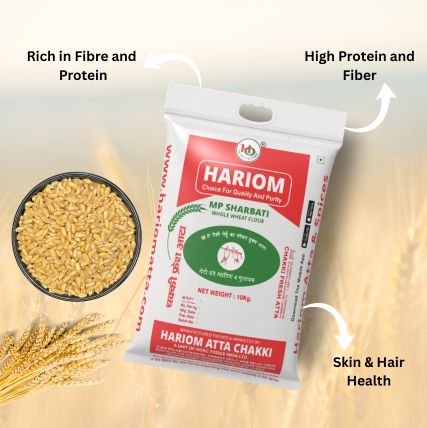
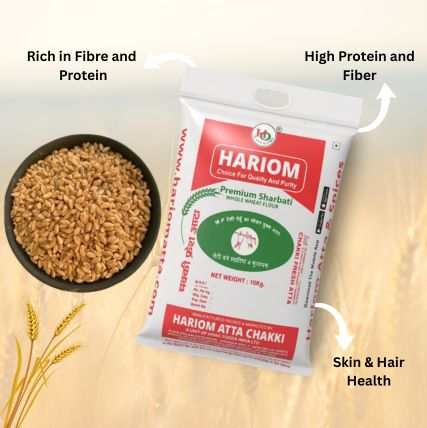
At Hariom Atta, every batch is stone-ground fresh specifically for your order: Sharbati, Multigrain, Ragi, Jowar, and the rest of the range, which means by the time it reaches you, it hasn't been sitting in a warehouse losing what makes it worth buying in the first place.