If you've ever stood in the kitchen wondering whether your evening roti is actually working against your digestion, you're not imagining things. Constipation affects roughly 22% of adults in India, and the single biggest driver behind it isn't usually some rare condition; it's a diet that's quietly low on fiber, day after day, often without anyone noticing.
Since roti shows up on most Indian plates twice a day, it's also one of the easiest places to fix the problem. Not every atta does the same job here, though. Some genuinely help things move along; others, eaten on their own, do very little. Here's what actually works and why.
Which Roti Is Best for Constipation?
Ragi (finger millet) roti is generally considered the most effective option for relieving constipation, thanks to its exceptionally high fiber content and gentle, slow-digesting nature. It stimulates bowel movement, softens stool, and rarely causes the bloating that some other high-fiber foods can trigger.
Whole wheat roti and multigrain roti are strong supporting options; both add meaningful bulk fiber to the diet, but neither matches ragi's specific impact on regularity when used as a daily, dedicated digestive aid.
Why Ragi Roti Works So Well for Constipation
Ragi earns its reputation here for a few concrete reasons, not just tradition. It's naturally gluten-free and carries one of the highest fiber contents of any commonly used Indian flour fiber that adds real bulk to stool and helps it move through the intestines more easily.
Because ragi digests slowly and gently, it's also less likely than some other fiber-rich foods to cause the gas or heaviness that can sometimes accompany a sudden increase in fiber intake. Many dietitians specifically recommend including ragi roti several times a week, not necessarily daily, but as a regular rotation for sustained digestive benefit rather than a one-time fix.
It also doesn't hurt that ragi brings calcium and iron along with the fiber, which is part of why it has stayed a staple in South Indian households for generations, long before "gut health" became a wellness buzzword.
Whole Wheat Roti: The Reliable Everyday Base
Whole wheat atta remains the most commonly eaten roti across North India, and for good reason: it retains the bran layer of the wheat grain, which is where most of the fiber lives. That fiber adds bulk to stool and supports steady, regular digestion when eaten consistently as part of a balanced diet.
It's a meaningfully better choice for digestion than refined flour (maida), which strips away the bran entirely and offers very little fiber in return. That said, whole wheat alone isn't usually as potent for constipation relief as ragi, it's a solid daily foundation rather than a targeted fix.
One caveat worth mentioning: some people experience bloating or heaviness with wheat, particularly those with gluten sensitivity. If that sounds familiar, rotating in gluten-free options like ragi or jowar is usually the better path forward.
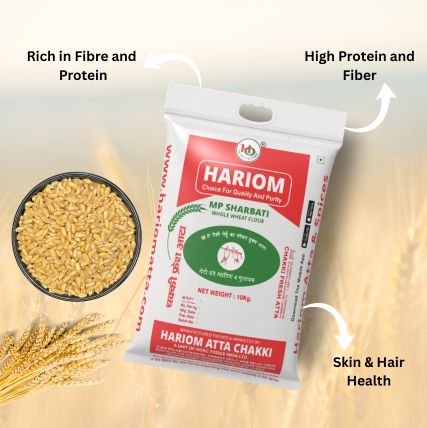
Shop Hariom's M.P. Sharbati Wheat Flour →
Multigrain Roti: Fibre From Multiple Directions at Once
Multigrain atta, typically a blend of wheat with grains like barley, ragi, soya, chana, and maize, brings together several different fiber types in a single roti, which is part of why it tends to outperform single-grain wheat atta for digestive support.
Barley deserves a specific mention here: it contains beta-glucan, a soluble fiber that has been studied extensively for its digestive and metabolic benefits, working gently to support gut health without disrupting your existing eating habits. Combined with ragi and chana in a well-formulated multigrain blend, the overall fiber profile becomes considerably more comprehensive than wheat alone.
This makes multigrain roti a practical everyday choice for households that want consistent digestive support without switching to a single specialty flour full-time.
Shop Hariom's Multigrain Atta →
For more on how this 7-grain blend supports overall health, see our detailed breakdown: is multigrain atta good for diabetics?
Much of the same fiber science applies to digestion as well
Besan (Gram Flour) Roti: An Underrated Option
Besan doesn't get mentioned in constipation conversations as often as it should. Made from chana dal, it's rich in both protein and soluble fiber, and a besan-wheat blend (commonly used for missi roti) genuinely supports digestive regularity better than plain wheat alone.
It's not typically used as a standalone roti flour day to day, but mixing a portion of besan into your regular atta ,even occasionally, is a simple way to add extra fiber without changing your routine dramatically.
Quick Comparison: Best Roti Options for Constipation
| Flour | Fibre Level | Best Use Pattern | Notes |
|---|---|---|---|
| Ragi Atta | Very High | 2–4 times per week, or daily if tolerated well | Most targeted relief, gluten-free, gentle on digestion |
| Multigrain Atta | High | Daily, as your regular roti | Combines multiple fibre types; well-rounded daily option |
| Whole Wheat Atta | Moderate-High | Daily, as a baseline | Reliable, but less potent alone than ragi for active constipation |
| Besan/Missi Roti | Moderate-High | Occasionally, blended with wheat | Adds protein alongside fiber. |
| Maida (refined flour) | Very Low | Avoid for regular use | Strips out the bran where most fibre lives |
A Few Habits That Make Your Roti Work Harder
The right flour matters, but it works best alongside a few supporting habits:
Drink enough water throughout the day. Fiber needs water to do its job properly; without enough fluid intake, even a high-fiber diet can struggle to relieve constipation effectively.
Don't increase fiber too suddenly. If your current diet is fiber-light, ease into ragi or multigrain rotis gradually over a couple of weeks rather than switching overnight to avoid temporary bloating.
Pair roti with vegetables and dal. A roti eaten alongside fiber-rich sabzi and dal does considerably more for digestion than the same roti eaten with a low-fiber side.
Stay physically active. Even a short daily walk supports regular bowel movement meaningfully; fiber and movement work together, not separately.
Frequently Asked Questions About Roti and Constipation
Which roti is best for constipation, ragi or wheat? Ragi roti is generally considered more effective for relieving constipation due to its higher fiber content and gentler digestion. Whole wheat roti is a good daily baseline but is usually less potent on its own for active constipation relief.
How often should I eat ragi roti for constipation relief? Most dietitians recommend including ragi roti several times a week rather than as an occasional food, since consistent intake supports more sustained digestive regularity than a single serving.
Can multigrain roti help with constipation? Yes. Multigrain atta combines several fiber sources, including barley's beta-glucan and ragi's natural fiber, making it a well-rounded daily option for supporting regular digestion.
Is wheat roti bad for constipation? No, whole wheat roti is not bad for constipation and does provide useful fiber from the retained bran. However, some individuals with gluten sensitivity may experience bloating with wheat, in which case ragi or jowar roti may work better.
Does eating roti every day prevent constipation? Eating fiber-rich roti regularly particularly ragi or multigrain varieties, combined with adequate water intake and physical activity, can meaningfully support regular bowel movements as part of an overall balanced diet.
Build Better Digestion Into Your Daily Roti
Switching to a more fiber-rich atta is one of the simplest, lowest-effort changes you can make for digestive health; no special diet plan is required, just a different bag of flour in your regular routine.
Ragi Atta and Multigrain Atta are both stone-ground fresh on demand at Hariom Atta, preserving the natural bran and fiber, exactly the portion of the grain that is most beneficial to your digestion.
Explore Hariom's Fibre-Rich Atta Range →
This article is for general informational purposes and is not medical advice. If constipation is persistent, severe, or accompanied by other symptoms, please consult a doctor.