Type "Sharbati atta vs Khapli atta" into Google and you'll find no shortage of articles confidently declaring one of them the winner. The honest answer is less dramatic and more useful: neither one is universally better, they're built for different jobs, and the right choice depends on what you actually want from your daily roti.
Here's the comparison without the sales pitch, so you can decide for yourself.
What Is the Difference Between Sharbati Atta and Khapli Atta?
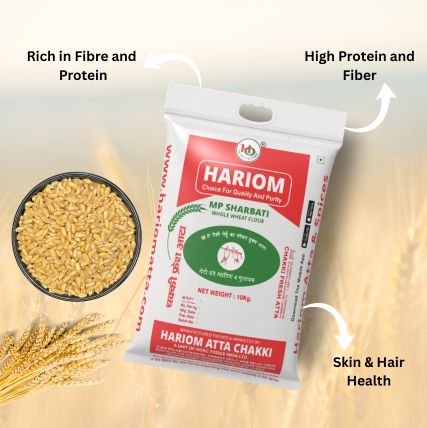
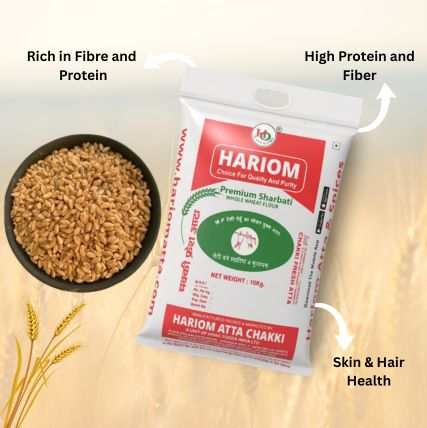
Sharbati atta comes from a premium modern wheat variety grown almost exclusively in the Sehore-Vidisha belt of Madhya Pradesh, prized for its naturally sweet taste, golden color, and high gluten content, which translates directly into soft, fluffy, elastic rotis.
Khapli atta comes from Emmer wheat (Triticum dicoccum), one of the oldest cultivated wheat varieties in the world, often called India's original "ancient grain." It naturally contains less gluten than modern wheat, digests more slowly, and carries a denser, earthier, nuttier flavour.
In short: Sharbati was effectively selected over generations for texture and taste. Khapli has stayed close to its original, less-processed form, which is exactly why the two behave so differently in your kitchen.
Sharbati Atta vs Khapli Atta: Side-by-Side Comparison
| Factor | Sharbati Atta | Khapli Atta (Emmer Wheat) |
|---|---|---|
| Roti Texture | Soft, light, fluffy, stays pliable for hours | Denser, coarser, nuttier bite |
| Taste | Naturally sweet, mild | Earthy, nutty, more robust |
| Gluten Content | Higher — better elasticity, easier rolling | Naturally lower, denser dough, harder to roll thin |
| Glycemic Index | Moderate to high (typical of modern wheat) | Lower (~48), gentler effect on blood sugar |
| Dietary Fibre | Good | Generally higher per serving |
| Digestibility | Fine for most people | Often easier on sensitive stomachs |
| Best Suited For | Everyday soft rotis, parathas, lunchbox meals | Diabetics, weight management, gut-sensitive diets |
| Origin | Sehore-Vidisha belt, Madhya Pradesh | Ancient grain, grown in pockets across India |
When Sharbati Atta Is the Better Choice
If softness is non-negotiable in your house and for most Indian families eating roti twice a day, it is, so in this case, Sharbati atta is genuinely difficult to replace. Its naturally higher gluten content means the dough absorbs water more evenly, rolls out without tearing, and produces rotis that puff easily and stay soft for hours, even without wrapping them in a cloth.
It's also the better pick if you're cooking for children, elderly family members, or anyone who finds denser, ancient-grain flours harder to chew or digest comfortably. For everyday family cooking where texture and ease matter most, Sharbati remains the practical favorite.
Shop M.P. Sharbati Wheat Flour →
For the full breakdown of what makes this wheat variety distinct — including exactly where it's grown and why — see our complete guide to Sharbati atta.
When Khapli Atta Is the Better Choice
If you're managing diabetes, pre-diabetes, or simply want a gentler effect on blood sugar from your daily roti, Khapli's lower glycemic index gives it a genuine, measurable edge over Sharbati. Its naturally lower gluten content also makes it a reasonable option for people who find regular wheat heavy or harder to digest, while its higher fiber and mineral density add up to more nutrition per bite.
The trade-off is texture: Khapli rotis are noticeably denser and coarser than Sharbati rotis, even when made carefully, and the dough is harder to roll thin. For households prioritizing gut comfort and blood sugar management over softness, that trade-off is usually worth it.
The Practical Middle Ground: Blending the Two
This is the detail most "versus" articles skip past, and it's arguably the most useful takeaway here: you don't have to pick a side. Many nutritionists and home cooks blend the two commonly in a 70:30 or 50:50 Sharbati-to-Khapli ratio to get noticeably softer rotis than pure Khapli alone while still gaining meaningfully better fiber and a gentler glycemic response than pure Sharbati.
If you're trying to ease a household used to soft wheat rotis toward a healthier, lower-GI option without a jarring change in taste or texture, starting with a smaller proportion of Khapli mixed into your regular Sharbati atta is a far more sustainable approach than switching outright.
Frequently Asked Questions
Which is better, Sharbati atta or Khapli atta? Neither is universally better. Sharbati atta is the better choice for soft, fluffy, everyday rotis, while Khapli atta is better suited for blood sugar management and gut-sensitive diets due to its lower glycemic index and higher fiber content.
Is Khapli atta better than Sharbati for diabetics? Yes. Khapli atta has a lower glycemic index (around 48) compared to Sharbati and most modern wheat varieties, meaning it causes a slower, gentler rise in blood sugar after meals making it generally preferred for diabetics.
Can I mix Sharbati and Khapli atta together? Yes, and many households do exactly this. A common ratio is 70% Sharbati to 30% Khapli, which balances the softness of Sharbati rotis with the added fibre and lower glycemic impact of Khapli.
Does Khapli atta taste different from Sharbati atta? Yes, noticeably. Khapli has an earthy, nutty, slightly denser flavor, while Sharbati is milder and naturally sweet, with a softer, fluffier roti texture.
Is Khapli atta healthier overall than Sharbati atta? Khapli generally offers more fiber and minerals per serving and a lower glycemic index, making it the more nutritionally dense option. However, "healthier" depends on your specific goals; Sharbati remains an excellent source of protein and energy and is far easier to cook with for soft, everyday rotis.
Choose Based on What Your Kitchen Actually Needs
There's no need to feel pressured into picking a "winner" here. If your household eats roti daily and softness matters most, Sharbati remains one of the best wheat varieties available in India for exactly that. If blood sugar management or digestion is the priority, Khapli deserves serious consideration on its own or blended into your regular atta.
At Hariom Atta, every batch of M.P. Sharbati Wheat Flour is stone-ground fresh on order, straight from the Sehore-Vidisha belt, so whichever way you choose to balance your flour, the Sharbati half of that equation is as fresh and authentic as it gets.