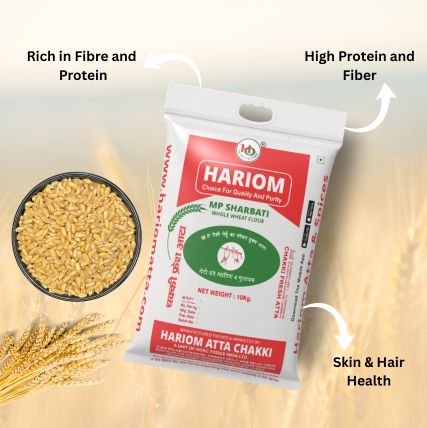
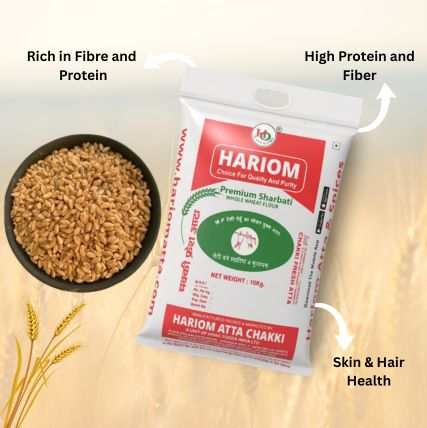
Ask anyone who grew up eating rotis made from Sharbati atta, and they'll tell you the same thing — once you've had it, ordinary atta just doesn't feel the same. There's a softness to it, a slight natural sweetness, and a golden colour that's hard to miss. This flour comes from a wheat variety grown almost entirely in one belt of Madhya Pradesh, which is exactly why it's often called "Gold Wheat" by farmers and traders in the region.
If you're planning to buy Sharbati wheat atta online for the first time, or you're simply tired of settling for whatever's available at your local store, this guide will walk you through everything worth knowing — what makes MP Sharbati wheat special, how the Sharbati atta price is decided, how to spot organic Sharbati atta, and where you can actually get genuine Sharbati gehu online instead of a mixed or polished imitation.
So, What Exactly is Sharbati Atta?
In simple terms, Sharbati atta is the flour ground from Sharbati wheat — a naturally golden, sweet-tasting variety grown mainly around Sehore, Vidisha, and Ashoknagar in Madhya Pradesh. Farmers in this belt will tell you it's the soil that makes the difference. The black cotton soil here, locally known as "kali mitti," combined with just the right amount of rainfall, gives the grain its shine, its slightly sweet flavour, and a gluten content that regular wheat simply doesn't match. That's the real reason wheat Sharbati has become a staple not just in homes, but in hotel kitchens and restaurants across the country.
You can actually spot it with the naked eye. Genuine MP Sharbati wheat has small, rounded grains with a golden tint, unlike the flatter, duller grains of ordinary wheat. It's also why this flour carries a premium tag, and why the Sharbati wheat atta price tends to run a little higher than what you'd pay for regular atta.
Why Has MP Sharbati Wheat Built Such a Reputation?
A few things set it apart, and it's worth understanding these before you decide what you're paying for:
It only grows well in one region. Real Sharbati wheat comes from the Sehore belt of Madhya Pradesh. Wheat grown in other states and sold under the same name is usually a look-alike variety, not the real thing.
It's naturally sweet. No sugar is added anywhere in the process — the sweetness in a Sharbati roti comes purely from the grain itself.
It stays soft for longer. Thanks to its higher gluten content, chapatis made from this flour don't go stiff and hard within a couple of hours the way regular atta rotis often do.
It's genuinely nutritious. Naturally high in protein, fibre, iron, and B-vitamins — this isn't a wheat variety that needed marketing to earn its reputation.
Traditionally farmed batches carry less pesticide residue, especially when you're buying organic Sharbati atta rather than the conventionally grown version.
Sharbati Atta vs Regular Atta — A Quick Comparison
|
Parameter |
Sharbati Atta |
Regular Atta |
|
Grain colour |
Golden, shiny |
Dull brown |
|
Taste |
Naturally sweet |
Neutral |
|
Roti softness |
Stays soft for hours |
Hardens quickly |
|
Gluten content |
High |
Medium |
|
Price |
Premium |
Budget-friendly |
|
Growing region |
MP (Sehore, Vidisha) |
Grown across multiple states |
What Actually Decides the Sharbati Atta Price?
This is probably the question we get asked the most — "What's the current Sharbati atta price, and why does it vary so much between sellers?" Here's what actually goes into it:
Purity of the grain. A lot of what's sold as "Sharbati" in the open market is actually mixed with other wheat varieties. Genuine, unmixed MP Sharbati wheat price is naturally on the higher side.
Chakki-fresh vs mill-packaged. Stone-ground (chakki) atta usually costs a bit more than mass-produced, mill-packaged flour, but it holds onto more of its nutrients and flavour in the process.
Whether it's organic. Organic Sharbati atta, grown without chemical fertilisers, typically costs 15–25% more than the conventionally farmed version — and honestly, that gap reflects the extra effort that goes into growing it.
The season. Right after harvest, between April and June, wheat Sharbati price tends to be at its most stable. Prices can drift upward once you're further into the off-season.
Pack size. As with most staples, buying in bulk — 10 kg, 26 kg, or 50 kg — usually works out cheaper per kilo than smaller 1 kg or 5 kg packs.
At Hariom Atta & Spices, we've kept our MP Sharbati wheat price as transparent as possible. What you see on the product page is what you pay — no hidden milling charges, no surprise packaging costs added at checkout.
How to Tell if Your Sharbati Atta is Actually Genuine
Because so many sellers use the "Sharbati" label loosely, it's worth knowing what to check before you buy:
- Look at the whole grain, not just the flour. Ask for a sample of raw Sharbati gehu if you can. It should be small, rounded, and golden — not flat or pale.
- Trust your nose. Real Sharbati atta has a faint, naturally sweet smell. If it smells chemical or overly processed, that's a red flag.
- Ask for certification. Trustworthy brands are usually happy to share FSSAI details or third-party lab reports covering pesticide residue and gluten content.
- Ask where it actually came from. Genuine MP Sharbati wheat should be traceable back to Sehore, Vidisha, Ashoknagar, or a nearby district — not a vague "sourced from Madhya Pradesh" claim with no specifics.
- Buy from someone who works directly with farmers. Brands that source straight from MP farmers, like Hariom Atta, can vouch for purity far more reliably than an unbranded local seller reselling mixed stock.
Where Can You Actually Buy Sharbati Wheat Atta Online?
There was a time when finding good Sharbati atta meant walking into every kirana store in your area and asking "Sharbati wheat near me," only to settle for whatever bag happened to be on the shelf. That's changed. You can now order Sharbati wheat atta online and have chakki-fresh flour delivered to your doorstep instead.
At hariomatta.com, we've tried to bring that farm-to-home experience online in a way that actually holds up:
- Sourced directly from certified farmers in Madhya Pradesh
- Ground fresh in small batches, so nutrients aren't lost sitting in a warehouse
- Available in both regular and organic Sharbati atta options
- Honest MP Sharbati wheat online pricing, with no middlemen inflating the cost
- Delivered across India, so you're not stuck asking "Sharbati wheat near me" ever again.
Is Sharbati Atta Actually Good for Your Health?
Beyond the taste, there's a reason this flour has stuck around in Indian kitchens for generations:
- It's easier on digestion, thanks to a higher fibre content than refined flour.
- It keeps you fuller for longer, since the complex carbohydrates release energy gradually instead of all at once.
- It supports muscle health, given its relatively high protein and gluten content.
- It's a reasonable choice for diabetics in moderation, since it has a comparatively lower glycemic response than maida — though portion control still matters, as it does with any wheat flour.
- Organic Sharbati atta takes it a step further, cutting down on pesticide exposure for households that prefer to eat as naturally as possible.
Keeping Your Sharbati Atta Fresh at Home
A few small habits go a long way here:
- Store it in an airtight container — moisture and pantry pests are its biggest enemies.
- Keep the container somewhere cool and dry, away from direct sunlight.
- During the hotter months, refrigeration helps it last longer.
- Try to buy only what you'll use in about 30–45 days. Since stone-ground atta has no preservatives, freshness does have a shelf life, and buying smaller, more frequent batches usually gives you better rotis than one giant sack sitting around for months.
FAQ
· What is Sharbati atta and why is it special? It's flour milled from a golden, naturally sweet wheat variety grown mainly around Sehore in Madhya Pradesh, known for its soft texture and high gluten content.
Is MP Sharbati wheat different from normal wheat? Yes — it has smaller, rounder, golden grains and a naturally sweet taste, largely because of the unique black soil and climate of the Sehore-Vidisha belt that other wheat-growing regions don't replicate.
What is the current Sharbati atta price? It varies depending on purity, whether it's organic, and the pack size you choose, but it generally sits above regular atta because of its limited growing region and quality. For exact numbers, it's best to check the live pricing on the Hariomatta.com product page.
Is Sharbati atta good for health? Yes — it's a solid source of fibre, protein, and B-vitamins, and its complex carbs make it a better everyday choice than refined flour for most people.
How can I buy genuine Sharbati wheat atta online? Stick to brands that source directly from Madhya Pradesh farmers and are transparent about traceability, like hariomatta.com, rather than unbranded sellers who may be mixing Sharbati with cheaper wheat.
Why is organic Sharbati atta more expensive than regular atta? Because it's grown without chemical fertilisers or pesticides, which usually means lower yields and higher farming costs — and that gets reflected in the price.
Where can I find Sharbati wheat near me? Local stores often carry a mixed-quality version, so if purity matters to you, ordering Sharbati wheat atta online from a trusted brand is generally the safer bet — you get authentic, chakki-fresh flour delivered directly, no matter where you're located.
How do I know if Sharbati atta is pure or adulterated? Check the raw grain for that golden, rounded shape, smell for natural sweetness rather than anything chemical, and buy from sellers willing to show lab reports and sourcing details.
Is Sharbati atta the same as Gehu? "Gehu" simply means wheat in Hindi, so Sharbati gehu just refers to the same premium wheat grain that Sharbati atta is made from.
How should I store Sharbati atta to keep it fresh? Keep it airtight, in a cool and dry spot, and try to finish a batch within 30–45 days for the best taste, since it doesn't contain any artificial preservatives.
Why People Choose Hariom Atta for Their Sharbati Wheat Atta
We're not the only brand selling Sharbati atta online, and we won't pretend to be. But here's what we do differently:
We source directly from the Sehore-Vidisha belt in MP — the actual region this wheat is known for, not a vague "sourced from Madhya Pradesh" claim. We stone-grind it fresh, in small batches, instead of sitting on large stock for months. We offer both regular and organic Sharbati atta, so you can choose based on your budget and preference. Our pricing stays fair and transparent, without hidden costs tacked on at checkout. And delivery is reliable, so ordering online doesn't mean waiting around wondering if your flour will actually show up.
If you're done asking "Sharbati wheat near me" and getting mediocre answers, it might be time to just order it online. Visit hariomatta.com and see what a genuinely good roti is supposed to taste like.