If you've ever wondered why your roti at a friend's house was noticeably softer, sweeter, and stayed fresh longer than yours — the answer is very likely Sharbati atta. It's the wheat variety chefs and serious home cooks quietly switch to once they've tried it, and it's fast becoming the most searched-for atta in India. Here's everything you need to know before you buy it.
What Is Sharbati Atta?
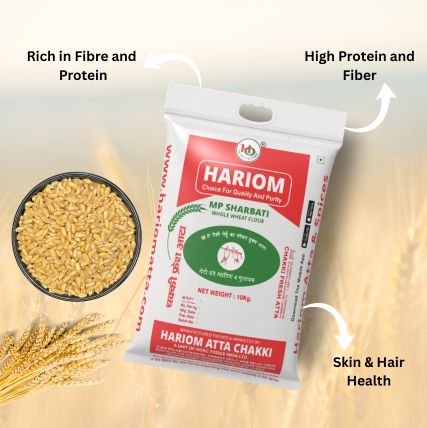
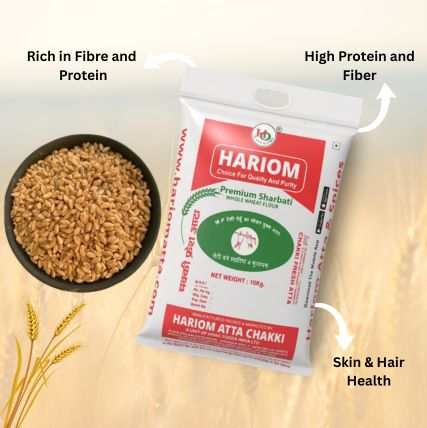
Sharbati atta is whole wheat flour milled from Sharbati wheat, a premium variety grown almost exclusively in the Sehore and Vidisha districts of Madhya Pradesh. It's known for its golden-hued grains, naturally sweet taste, and higher protein content compared to standard wheat varieties like Lokwan.
The name comes from the Hindi word sharbat (sweet syrup) — a nod to its mild natural sweetness, which comes through clearly once it's rolled into a roti.
What makes the wheat itself special is where and how it grows. The Sehore-Vidisha belt has potassium-rich soil and relies on rainfed (not canal) irrigation, which naturally boosts the grain's protein content by nearly 2% compared to regular wheat — without any fertiliser tricks. This also means the crop needs little to no pesticide, which matters if purity is a priority for your kitchen.
Is Sharbati Atta Better Than Normal Atta?
For most households, yes — Sharbati atta produces softer, more elastic dough because of its higher gluten and protein content, and its grains absorb more water during kneading, keeping rotis soft for hours after cooking. Regular atta (often milled from Lokwan or mixed wheat) is a fine everyday option, but it doesn't match Sharbati on texture, shelf-softness, or taste.
The difference is most obvious in three areas:
|
Factor |
Sharbati Atta |
Regular Atta |
|
Protein/Gluten |
Higher (better dough elasticity) |
Moderate |
|
Water absorption |
High — softer, fluffier rotis |
Lower — can dry out faster |
|
Taste |
Naturally sweet, nutty aroma |
Neutral |
|
Roti shelf-softness |
Stays soft for hours |
Hardens faster |
|
Price |
Premium |
Standard |
Sharbati Atta vs Lokwan Wheat: What's the Real Difference?
Lokwan wheat is coarser, rounder in shape, and has a more neutral taste — it's the everyday wheat used in most mass-market packaged atta brands. Sharbati wheat is smaller-grained, golden in colour, and naturally sweeter, which is why it's positioned as the "premium" choice range.
If you're deciding between the two: choose Lokwan for everyday cooking on a budget, and Sharbati when roti texture and taste genuinely matter to you — for daily family meals, guests, or if you're simply tired of dry, cardboard-y rotis.
Is Sharbati Atta Good for Diabetics?
Sharbati atta's high fibre content helps slow down sugar absorption into the bloodstream, giving it a comparatively lower glycemic impact than refined flour — but it should still be consumed in sensible portions, and people managing diabetes should check with their doctor before making any major dietary change.
The fibre doesn't just help blood sugar — it also supports digestion and helps you feel fuller for longer, which is one reason Sharbati atta is often recommended in weight-conscious diets too.
Is Sharbati Atta Good for Weight Loss?
Sharbati atta can support weight management goals because its fibre and protein content increase satiety, meaning you feel full on smaller portions. It isn't a low-calorie "diet food" in the way some marketing suggests, but swapping refined maida-heavy foods for whole Sharbati atta rotis is a genuinely healthier substitution for most people.
Why Is Sharbati Atta Expensive?
Sharbati atta costs more than regular atta because of limited geography (it only grows well in a specific region of Madhya Pradesh), lower yield per acre compared to high-yield wheat varieties, and higher demand from both households and premium atta brands. You're essentially paying for scarcity and quality, not marketing.
This is also why buying directly from a mill or a brand that sources straight from Sehore/Vidisha — rather than a multi-layered distribution chain — usually gets you better quality for a fairer price.
How Can You Tell If Sharbati Atta Is Pure?
Genuine Sharbati atta has a distinct golden tinge (not stark white), a subtly sweet smell even before cooking, and dough that requires slightly more water to knead than regular atta. If a "Sharbati" atta looks bright white, has no aroma, and behaves exactly like standard wheat flour when kneaded, it's likely blended or mislabelled — a common issue with cheaper packaged options.
The safest way to guarantee purity is to buy from a source that mills the wheat fresh, ideally after you place your order, rather than atta that's been sitting in a warehouse for weeks or months.
Which State Produces the Best Sharbati Wheat?
Madhya Pradesh — specifically the Sehore and Vidisha districts — produces the Sharbati wheat considered the gold standard in India. This region is sometimes referred to in the trade simply as India's "golden wheat belt," and virtually every atta brand that markets a "Sharbati" or "MP Atta" variant sources from this same region.
Fresh-Milled vs Packaged Sharbati Atta: Why It Matters
This is the part most buying guides skip. Even genuine Sharbati wheat loses nutritional value and flavour once it's milled — the natural oils in the bran begin to oxidise within days, which is why packaged atta sitting on a shelf for weeks (however good the wheat) is never as good as atta milled fresh and delivered to your door.
This is the single biggest reason to buy Sharbati atta from a source that mills to order rather than from long shelf-life packaged stock — freshness affects taste and nutrition more than brand name does.